

By Grant R. Crum, Manager, Chicago
Family offices often devote substantial resources to preserving wealth across generations, yet transferring control might be far more challenging than transferring ownership. Differences in voting rights, economic interests, governance authority, and liquidity expectations can create complexity during succession planning. Valuation professionals can provide an objective framework for evaluating transfer structures and helping family offices align succession, governance, and long-term family objectives.
Introduction
For many family offices, preserving wealth is not the greatest challenge. Successfully transferring decision-making authority to the next generation is often far more difficult. Ownership can be transferred through gifts, trusts, or estate plans, but control seldom transfers as easily.
The transfer of control is not just a transfer of legal ownership. Rather, it often also involves the transfer of decision-making authority, economic rights, voting power, or management influence. These issues can become particularly challenging when certain family members are active in the family business or family office while other family members are passive owners or beneficiaries.
In practice, valuation issues often arise not because family members disagree on ownership percentages, but because they disagree on the rights attached to those ownership interests. A beneficiary involved in management might view voting control as essential to preserving the business, while passive beneficiaries might focus primarily on liquidity and economic return.
Understanding those differing priorities is often the first step in designing a workable succession structure.
During the process of transferring control from one generation to the next, a valuation professional can provide clarity to the family office. While a valuation analysis is commonly associated with establishing the fair market value of an ownership interest, such an analysis also can help the family evaluate the economic implications of different governance and ownership structures.
For example, a valuation analysis might help quantify the effect of transferring voting rights separately from economic rights or illustrate how various transfer structures affect different family stakeholders. The valuation professional does not decide who should control the family enterprise, how family members should be treated, or which succession plan is most appropriate. Those decisions typically are made by family members, family office employees, trustees, legal counsel, and tax advisors. Rather, the valuation professional provides an objective framework that can help those parties evaluate alternatives and make more informed decisions.
The Concept of Control in a Family Office
In practice A family office might hold or oversee various types of assets. These assets might include marketable securities, privately held operating companies, real estate holding companies, private equity investments, investment partnerships, limited liability companies, or other closely held entities. When a family office plans the transfer of assets to the next generation, the concept of control becomes particularly important. Control is generally associated with the ability to increase expected cash flow or reduce the required rate of return through the exercise of decision-making authority.
This decision-making capability might allow the owner of a controlling interest to:
- Elect management
- Set compensation levels for employees
- Declare distributions to shareholders
- Transact with the assets of the business
- Incur debt
- Liquidate, sell, or dissolve the business
- Amend the governing documents of the business
- Run the day-to-day operations of the business
A noncontrolling owner, meanwhile, might have little to no ability to influence these decisions. Therefore, an otherwise identical controlling ownership interest is typically more valuable than a noncontrolling ownership interest in the same business. This difference in value often is reflected through control premiums observed in market transactions and discounts for lack of control applied to noncontrolling interests. A controlling owner might be able to use the prerogatives of control to increase cash flow, reduce risk, improve operations, influence the strategic direction, or set the timing and amount of distributions.
However, control in a family office is typically more complicated than a simple ownership percentage. For example, a family member might own a majority of the economic interests in a business but might not have voting control. Alternatively, a family member might have voting control over certain decisions while remaining subject to restrictions contained in governing documents, trust agreements, or other ownership arrangements. As a result, control cannot be evaluated solely by reference to an ownership percentage. Instead, it depends on the specific rights, restrictions, and economic benefits attached to the subject interest. Understanding those attributes is an important step in assessing the value of an ownership interest and the effect of a proposed transfer structure.
This issue is particularly important during a transfer of control between generations because different transaction structures can have materially different valuation implications. A family office might choose to transfer control gradually through gifts or sales of noncontrolling interests, transfer economic ownership while retaining voting authority, or allocate decision-making rights differently among active and passive family members. Each alternative might affect governance and value.
For example, a family office might decide that one beneficiary is best suited to run the family enterprise. That person might be actively involved in the operating business and have the experience necessary to assume leadership. However, other beneficiaries might have equal economic expectations, even if they are not involved in management. In that circumstance, the family office has to consider how to allocate voting rights, economic rights, and liquidity rights in a manner that aligns with the family’s objectives.
The senior generation also might want to transfer ownership interests to trusts for the benefit of the next generation. Such transfers might be appropriate from an estate planning perspective, but they also might alter the rights associated with the transferred interests in ways that are not immediately apparent. A family office might consider the tax consequences of a proposed transfer, as well as its effect on governance, liquidity expectations, and future decision-making authority. Understanding the rights associated with a transferred interest is as important as understanding the percentage ownership being transferred.
Performing a valuation analysis can assist with identifying and analyzing these issues before the transfer occurs. A valuation professional might help the family office evaluate questions such as:
- What is the fair market value of the ownership interests being transferred?
- Do the subject interests represent controlling or noncontrolling ownership interests?
- Do the subject interests possess voting rights or only economic rights?
- Are there restrictions on transferability?
- Do the governing documents provide buy-sell rights, redemption rights, or rights of first refusal?
- Does the ownership interest provide any ability to influence distributions or force a liquidation or sale?
- Would a hypothetical willing buyer require a higher expected return—and, therefore, a lower indicated value—than would be implied by a controlling, marketable interest level of value?
Although these questions are economic in nature, they often influence tax planning, governance decisions, liquidity expectations, and succession planning objectives.
Two valuation concepts are particularly relevant in this context. A discount for lack of control (“DLOC”) reflects that a noncontrolling ownership interest might not provide the holder with the ability to direct management, control distributions, approve major transactions, or otherwise exercise the prerogatives of control. A discount for lack of marketability (“DLOM”) reflects that an ownership interest in a closely held entity might not be readily converted into cash, particularly when transfer restrictions, buy-sell provisions, or the absence of an active market limits liquidity.
These discounts depend on the specific facts and circumstances of the subject interest, including the rights, restrictions, and economic benefits defined in the governing documents. As a result, a valuation analysis might help a family office connect the technical requirements of a transaction with the broader strategic goals of the family.
Governing Documents’ Influence
To accurately appraise an ownership interest that is transferred as part of a succession plan, the valuation professional may review the organizational and governing documents of the subject company. These documents might include the articles of incorporation, bylaws, operating agreements, shareholder agreements, voting agreements, trusts, and buy-sell agreements. Collectively, these documents define many of the rights and restrictions associated with the subject ownership interest.
For example, the organizational and governing documents might describe:
- Voting rights
- Distribution rights
- Transfer restrictions
- Redemption rights
- Approval rights over major transactions
- Rights of first refusal
- Put or call rights
- Management appointment rights
- Restrictions on a liquidation or sale
- Different classes of ownership interests
These provisions merit consideration by a valuation professional because they affect the economic value of the subject interest. An ownership interest that appears to represent control based solely on percentage ownership might not provide unilateral control if the organizational or governing documents require the consent of other owners for major decisions. Conversely, a smaller ownership interest might possess key voting rights that increase its economic value.
This review of the organizational and governing documents can be particularly important when a family office plans to transfer ownership control to the next generation through multiple classes of equity. For example, the senior generation might retain voting control while transferring nonvoting interests to the next generation or trusts for their benefit. In that case, the transferred interests might have a different value from an otherwise identical voting interest because the holder lacks certain rights associated with control.
Depending on the facts and circumstances, control characteristics, voting rights, and marketability might affect the value of the subject interest. Conversely, the next generation might receive voting control while remaining subject to provisions that restrict distributions, transfers, or significant corporate actions. In either case, the valuation consequences depend on the rights contained in the governing documents rather than ownership percentage alone.
Objective Framework for Decision-Making
The transfer of control from one generation to the next often involves difficult conversations among family members and advisors. The senior generation might want to transfer control to the next generation slowly, while the next generation might want to assume control of the family enterprise right away. Active family members might want to continue operating the family-owned business, while passive family members might want to sell the family-owned business for cash. Trustees might focus on fiduciary responsibilities, while legal and tax advisors might focus on structure and compliance. These perspectives are not necessarily inconsistent, but they can lead to disagreements when the parties have different priorities or different expectations regarding ownership, control, and liquidity.
A valuation analysis can provide an objective framework for these discussions. The valuation professional can help identify the value drivers of the family-owned business, the economic characteristics of different ownership interests, and the valuation implications of alternative succession structures. In situations where family members have different objectives, a valuation analysis can provide an economic measurement for evaluating alternatives. For example, an analysis might help explain why a noncontrolling, nonmarketable interest is not economically equivalent to a proportionate share of the enterprise value or how voting rights and liquidity rights can meaningfully affect value.
Valuation can help shift discussions away from individual preferences and toward the economic characteristics of the ownership interests themselves. The valuation professional is not advocating for a particular outcome but, rather, providing an independent assessment of the economic consequences associated with different alternatives.
Liquidity Considerations
In many family-owned enterprises, disagreements arise not from questions of control but from differing expectations regarding liquidity. Closely held family businesses are frequently illiquid. Ownership interests might not be publicly traded, and the organizational and governing documents might restrict transfers to third parties. In addition, the family might have no intention of selling the business or investment assets in the near term. This lack of liquidity can create challenges for passive family members or beneficiaries who want access to cash. It also can create challenges for active family members who wish to retain control of the family enterprise but lack the resources necessary to provide liquidity to other family members.
A family office might consider several mechanisms to address liquidity needs, including:
- Periodic distributions
- Redemption programs
- Buy-sell agreements
- Installment purchases
- Life insurance planning
- Debt financing
- Recapitalization transactions
- Sales of noncore assets
A valuation professional can help evaluate these various alternatives by estimating the fair market value of the ownership interests involved and analyzing the economic effect of different transaction structures. For example, liquidity provided through a redemption program might affect shareholders differently from liquidity provided through periodic distributions or installment purchases. If the family office considers a redemption program, the valuation professional might help assess whether the redemption price should reflect a DLOC, a DLOM, or both. In addition, the valuation professional might help the family office understand how a proposed liquidity mechanism might affect the value of the remaining ownership interests.
Liquidity planning is often as much a governance issue as it is a financial issue. Family members might have different expectations regarding when and how ownership interests can be converted into cash. If those expectations are not addressed clearly, misunderstandings can develop and eventually become a source of conflict during or after a transfer of control. By quantifying the effect of different voting rights, liquidity provisions, and economic interests, a valuation analysis can help the family office understand the economic trade-offs associated with the proposed structure.
Estate Planning and Wealth Transfer
The transfer of control to the next generation often occurs alongside estate and gift tax planning. An owner might transfer ownership interests during their life through gifts or sales to trusts for the benefit of their children. Alternatively, ownership interests might transfer at death through an established estate plan. In either case, the family office and its advisors typically have to understand the fair market value of the transferred interests. Valuation is important in this context because it supports tax reporting and compliance while helping the family understand the economic consequences of a proposed transfer.
However, the valuation analysis also can support broader succession objectives. For example, gifting a noncontrolling ownership interest might transfer economic value to the next generation without transferring immediate control. That might be consistent with a succession plan in which the next generation gradually assumes responsibility. Alternatively, transferring voting interests might accelerate the transfer of decision-making authority. A recapitalization might allow the older generation to separate voting control from economic value. These structures can allow families to align ownership transfers with broader goals related to governance, leadership succession, and wealth preservation.
Each structure involves different valuation and governance considerations. A valuation professional might assist the family office by evaluating how the structure of the transfer affects the fair market value of the subject interest. The valuation professional might evaluate the specific rights, restrictions, and economic attributes associated with the transferred interest, including the interest’s ability to influence management decisions, participate in distributions, or be transferred to a third party. By doing so, the valuation professional helps the family office understand not only the tax reporting value of the transferred interest but also how the proposed structure affects governance, control, and the long-term objectives of the family.
Reducing Disputes
A transfer of control between generations can create disputes if family members believe that the valuation process is unclear, the valuation conclusion is unsupported, or the economic consequences of the ownership structure are not well understood. A valuation professional can help reduce the likelihood of disputes by providing an independent, well-supported analysis of the fair market value of the subject ownership interests. This does not mean that every family member necessarily will agree with the valuation conclusion. However, a credible valuation analysis can demonstrate that the family office and its advisors considered the relevant facts, rights, restrictions, and valuation assumptions in a disciplined manner.
A valuation analysis might be particularly helpful when:
- Ownership interests are being transferred to some family members but not others
- Voting rights and economic rights are being separated
- Active family members are receiving control rights
- Passive family members are receiving noncontrolling interests
- Buyout or redemption provisions are being established
- Trusts are being funded with closely held business interests
- The family office is attempting to explain the economic impact of a succession plan
- Discounts for lack of control or lack of marketability are materially affecting the indicated value
In each of these situations, a valuation analysis can provide an economic reference point. In addition, the valuation professional’s work product might help advisors identify valuation issues that should be addressed before a transfer occurs. For example, a valuation professional might identify ambiguous governing-document provisions, outdated buy-sell formulas that do not align with fair market value, transfer restrictions that affect marketability, or ownership rights that affect whether the subject interest should be appraised on a controlling or noncontrolling basis. By identifying these issues through a valuation lens prior to a transaction, the professional can help the family office and its advisors better understand the economic implications of a proposed transfer and reduce the likelihood that valuation-related disagreements will arise after the transaction.
Example of Generational Transfer of Control
The following example illustrates how a valuation professional might assist a family office that is planning for the transfer of control to the next generation.
Let us assume that the Addams family owns 100 percent of the equity interests in ABC Manufacturing, LLC (“ABC Manufacturing”). ABC Manufacturing is a privately held operating company that was founded by the first generation and is managed by the second generation. The Addams family office oversees the family’s investment assets and coordinates planning for the Addams family.
The second generation consists of two siblings. One sibling serves as the chief executive officer of ABC Manufacturing and has spent their career helping operate and grow the business. The second sibling is not involved in day-to-day business operations and views their ownership interest primarily as a passive financial investment. As part of succession planning efforts, the Addams family office has identified two objectives. First, the active sibling would like to transfer decision-making authority and ownership to the third generation over time. Second, the passive sibling would like greater liquidity while reducing their concentration in ABC Manufacturing.
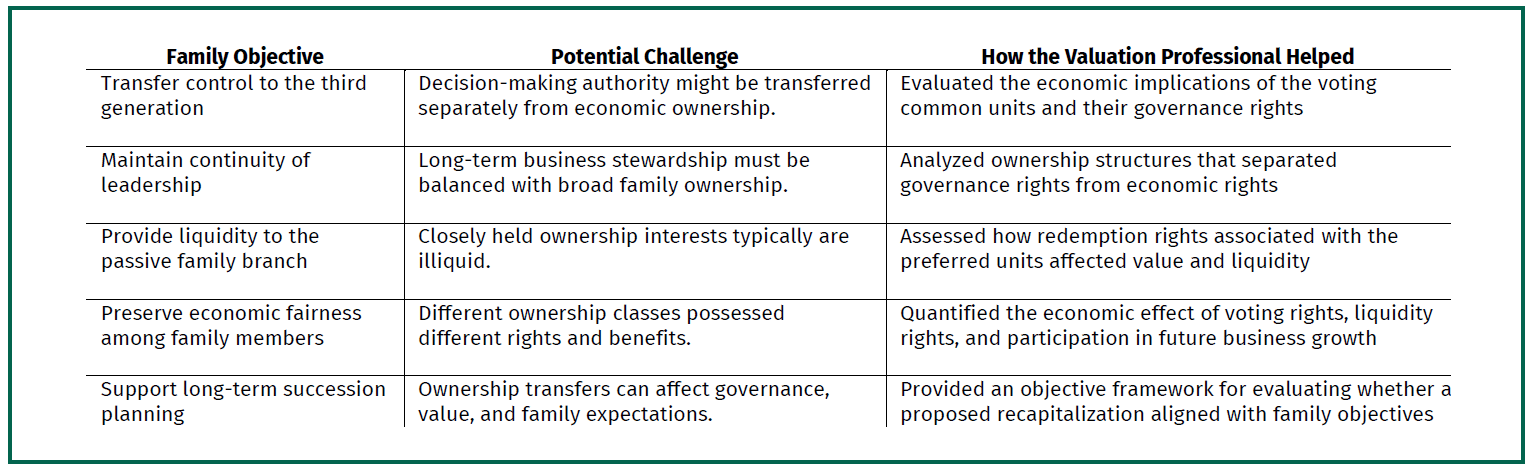
Table 1: ABC Manufacturing, LLC Valuation Process
After consulting with legal and tax advisors, the Addams family office considers a recapitalization of ABC Manufacturing. Under the proposed structure, voting common units would be retained by the active family branch and gradually transferred to third-generation family members involved in managing the business. The passive family branch would receive preferred units that provide stated annual distribution and redemption rights under certain circumstances. However, those units would have limited voting rights, limited participation in governance decisions, and limited participation in the future appreciation of the business.
To evaluate the proposed recapitalization, the valuation professional reviewed the rights associated with each class of ownership, including voting rights, distribution rights, redemption rights, governance authority, and participation in future appreciation. The analysis helped the Addams family office understand the economic trade-offs created by the proposed structure and evaluate whether the voting common units and the preferred units appropriately align with the family’s succession, governance, and liquidity objectives. Table 1 summarizes the work that the valuation professional performed to help the Addams family office achieve its goals.
The Importance of Documentation
Documentation is particularly important in connection with a transfer of control between generations. This documentation includes the facts considered, the methodologies applied, the assumptions selected, and the rationale for any valuation discounts or premiums. The documentation also includes the relevant rights, restrictions, and other economic characteristics associated with the subject ownership interest.
This documentation is helpful for several reasons. First, it supports the valuation conclusion and helps demonstrate compliance with applicable professional valuation standards. Second, it provides the family office with a clear record of the analysis performed, which can create efficiencies and promote consistency in future valuations if the family continues to transfer ownership interests over time. Finally, it can help stakeholders understand the basis for the valuation conclusion.
Generational transfers often occur over many years and might involve a series of gifts, sales, redemptions, recapitalizations, or trust transfers. Consistent documentation can help maintain continuity across those transactions and provide support for changes in valuation conclusions that result from evolving facts and circumstances. Without consistent documentation, the family office might face challenges explaining why valuation conclusions changed over time or why different ownership interests received different valuation treatment. Therefore, thorough documentation can help establish a disciplined and consistent framework for succession-related valuation analyses over time.
For recurring valuation engagements, a valuation professional might provide reconciliation presentations that compare current and prior valuation conclusions and identify the primary factors contributing to changes in value. These presentations might analyze changes in operating performance, growth expectations, risk assessments, capital structure, market conditions, and valuation assumptions between valuation dates. In addition, the presentations might highlight the effect of changes in governance rights, control characteristics, transfer restrictions, and liquidity attributes that affect the application or magnitude of a DLOC and DLOM. For family offices that engage in periodic transfers of ownership interests, these analyses can provide a useful framework for understanding valuation trends over time and explaining changes in value to family members, trustees, and other advisors.
Summary
Successfully transferring control to the next generation is often one of the most significant responsibilities of a family office. Such a transition might involve the transfer of voting rights, economic ownership, management authority, and long-term stewardship from one generation to the next. Because these issues affect family relationships and financial outcomes, the transfer of control can create significant complexity.
Active and passive family members might have different objectives. Voting and nonvoting interests might have different economic characteristics. Ownership interests might be subject to restrictions on transferability or limitations on liquidity. Organizational or governing documents might provide rights or constraints that are different from ownership percentage.
A valuation professional can assist the family office by providing an objective framework for evaluating these issues. The valuation professional can estimate the fair market value of the subject ownership interests, analyze the rights and restrictions associated with those interests, evaluate the valuation implications of alternative succession structures, and help the family office communicate the economic effect of the transition. In this way, a valuation can support more informed decision-making during the transfer of control. It can help the family office address issues of liquidity, governance, defensibility, and economic alignment. It also can help reduce the potential for misunderstanding among family members by creating a common economic foundation for succession planning discussions.
For a family office preparing to transfer control to the next generation, a valuation analysis is not solely a compliance requirement. Instead, it can serve as a practical planning tool that helps connect legal structure, tax planning, governance design, and family strategy. By evaluating the specific rights, restrictions, and economic characteristics associated with the ownership interests being transferred, the valuation professional can help the family office navigate one of its most consequential transitions with greater clarity and confidence.

About the Author

Grant is a manager at Willamette Management Associates, based in our Chicago office. He can be reached at (773) 399-4317 or at grcrum@willamette.com.